
Manuel de Falla in Cádiz: The Composer the Atlantic Never Let Go

Long before Manuel de Falla wrote a note that anyone outside Spain would hear, he was a boy in Cádiz listening to two things: his mother's piano through the walls of an apartment on Calle Ancha, and the Atlantic, which is never far from anywhere in a city built on a narrow strip of stone surrounded by sea. I've stood in Plaza de Mina more mornings than I can count, and there's a particular quality of light there, flat and silvery, reflected off water you can sense before you can see it, that explains more about Falla's music than any biography ever has for me. He spent most of his adult life somewhere else. Madrid. Paris. Granada. Eventually Buenos Aires. But Cádiz is where the sound started, and it's where, in the end, he came home.
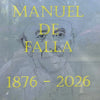
A glimpse up close. The rest is best lived on the tour, Manuel de Falla private Walking Tour
At a Glance:
- A Cádiz Childhood, Set to Music
- The Sound of the Atlantic in His Music
- A City That Shaped a Composer
- From Cádiz to the World, and Back to Granada
- Where Falla Still Rests
- Frequently Asked Questions
A Cádiz Childhood, Set to Music
Falla was born in Cádiz on November 23, 1876, into a merchant family that had arrived from Valencia and Catalonia a generation earlier, and he was baptized three days later at the church of Nuestra Señora del Rosario. His mother, María Jesús Matheu, was a trained pianist, and she gave him his first lessons in solfège. At age nine, his musical education became more formal under the piano teacher Eloísa Galluzo, followed by further study with Alejandro Odero, and harmony and counterpoint with Enrique Broca, all in Cádiz. His grandfather also sang him popular songs as a boy, a detail Falla himself recalled decades later in a letter to his biographer, Roland-Manuel.
Music wasn't his only outlet as a teenager. With a group of friends, he founded two short-lived literary magazines, El Burlón and El Cascabel, eventually taking on the role of editor.
The building where he was born still stands in Plaza de Mina, marked today by two small plaques. Nobody lives there as a museum piece; it's an ordinary apartment, occupied by an ordinary family. The family later moved to Calle Ancha, the wide, elegant spine of the old town.

The Sound of the Atlantic in His Music
What Falla wrote, eventually, doesn't sound like Cádiz in any literal way. There's no seagull cry in Noches en los jardines de España, no foghorn in El amor brujo. But there's something in the way his music moves, long, patient builds that resolve into sudden bursts of color, that I've always associated with growing up on the water, even if Falla never wrote a word connecting the two himself.
El amor brujo, with its "Ritual Fire Dance," remains his most performed work worldwide, and El sombrero de tres picos, written for Diaghilev's Ballets Russes, is the piece that made his name in Paris and London. La vida breve, his early opera, won a prize from Madrid's Real Academia de Bellas Artes de San Fernando in 1905, though it would be eight years before it was actually staged, and even then not in Madrid but in Nice. You can hear his work performed today at the Gran Teatro Falla, the theater that carries his name in the heart of the old town. Walking through Cádiz on our Falla walking tour is the fastest way I know to connect the music to the streets that made it.

A City That Shaped a Composer
Two places in Cádiz carry Falla's name and presence most directly today. The Gran Teatro Falla, an extraordinary red-brick building with three horseshoe arches and Neo-Mudéjar detailing unlike anything else in the city, was renamed in his honor in April 1926, the same month Cádiz named him "hijo predilecto," a favorite son, while he was still alive to receive the honor.
As a teenager, Falla was a regular guest at the evening chamber music gatherings hosted by Salvador Viniegra, a cellist and one of the city's leading patrons of music, who gave him access to his personal music library. It was there, among family friends rather than in a conservatory, that some of Falla's earliest compositions were first performed in public. The house is still standing, though I'll leave you to find it with a guide rather than a street address here.
The Museo de Cádiz, just off Plaza de Mina, holds a portrait of Falla among artifacts spanning 3,000 years of city history. It's worth the visit on its own merits, and doubly so once you know Falla's face is somewhere inside.

From Cádiz to the World, and Back to Granada
Falla left Cádiz for Madrid to further his studies, and later spent several formative years in Paris, where he built relationships with Debussy, Ravel, and other leading composers of the day. He returned to Spain in 1914, and in 1919 he settled in Granada, where he lived for close to two decades and formed one of the great friendships of his life with the poet Federico García Lorca. Together they organized the Concurso de Cante Jondo in 1922, a landmark event for the preservation of flamenco's oldest forms. If you want the fuller story of those Granada years, his friendship with Lorca is where I'd start. In the 1920s, honors followed: he was named an adoptive son of Seville, elected to Spain's royal academies of fine arts, and awarded France's Legion of Honor. His manuscripts and letters are kept today at the Auditorio Manuel de Falla in Granada, home to a documentation center preserving the composer's original archive and library. He left Spain in 1939 and died in Argentina in 1946, never returning. For the region that shaped him, from the sea in Cádiz to the hills of Granada, our Andalusia region guide ties the two cities together.

Where Falla Still Rests
Falla's remains were returned to Spain and laid to rest in the crypt of Cádiz Cathedral, built from local stone and sitting at ocean level beneath the golden dome above. The tomb carries the words Solo a Dios Honor y Gloria, Honor and glory to God alone, a fitting reflection of the deep religious faith that shaped so much of his later life.
Standing in that crypt today, it's hard not to think about the boy born a few streets away, who learned piano from his mother before he was old enough to reach the pedals. He spent his career moving toward bigger stages, Madrid, Paris, Granada, and international acclaim. And in the end, he came home to the city, and the sound, he started with.
If that's the kind of thread you like pulling on when you travel, our Andalusia intercity rides pass right through Cádiz, giving you the chance to see where else his story is written into the stone. Cádiz isn't the only city in southern Spain shaped by a hometown genius — see how Málaga celebrates its own, Picasso, in our guide to Picasso's Málaga.
Curious how a Falla afternoon might fit into a longer Cádiz or Andalusia itinerary? Get in touch and we'll help you build the trip around it.

Frequently Asked Questions
Where can I see Manuel de Falla's most important works in person?
His music is best experienced live rather than in a museum case, and Cádiz's own Gran Teatro Falla programs concerts of his work throughout the year, especially around Carnival season. In Granada, the Auditorio Manuel de Falla and its attached archive hold manuscripts, letters, and personal objects for anyone who wants to go deeper. If you're only in Cádiz briefly, the Museo de Cádiz holds a portrait of Falla worth seeking out.
Is there a specific place in Cádiz where I can still feel Falla's presence today?
The crypt of Cádiz Cathedral, where he's buried, is the place I'd send anyone short on time. The words carved on his tomb, a plain statement of faith, say a great deal about who he was. Plaza de Mina, where he was born, is a close second, especially early in the morning before the square fills up.
What's the best time of year to visit Cádiz?
Spring and early autumn give you warm days without the summer heat that settles over the bay. If Carnival interests you, plan for February, though book well ahead since the city fills up fast. I'd avoid August, when the heat is heavy and much of the city empties out for the coast.
How many days should I spend in Cádiz?
Two full days is enough to get a real sense of the city and follow Falla's story properly, with time left over for the beaches and the old town's tapas bars. If you're combining it with Jerez or the Andalusian coast, three or four days lets you go slower without feeling rushed.
How do I get to Cádiz?
The train from Seville takes about an hour and forty minutes and is the easiest option if you're coming from elsewhere in Andalusia. Jerez Airport, about forty minutes away, has regional connections, though most travelers arrive via Seville's airport and continue by train or private driver. If you'd rather skip the schedules altogether, our private intercity rides across Andalusia connect Cádiz with Seville, Granada, and the rest of the region on your own timetable.
What should I know before visiting Cádiz?
It's a walking city, small enough that a car becomes more burden than benefit once you're inside the old town. Many of the best restaurants close for a few hours in the afternoon, so plan meals around that rhythm rather than against it. And the Cathedral crypt closes earlier than the rest of the building, so check hours if that's a priority stop.
What's a common mistake travelers make in Cádiz?
Treating it as a day trip from Seville. Cádiz rewards a proper stay, not a few rushed hours off a train, and most day-trippers leave having seen the cathedral and little else. The city's real texture, its markets, its music history, its neighborhoods, needs at least an overnight to come through.
What should I pack for a Cádiz visit?
Comfortable shoes for cobblestones, a light jacket even in warmer months since the Atlantic wind picks up in the evening, and something for the beach if you're visiting between late spring and early autumn. Cádiz is casual by Spanish standards, so there's no need to overdress for dinner.
Is Cádiz a good fit for a solo traveler or a couple interested in music history?
Very much so. It's an easy city to navigate alone, safe to walk in the evening, and small enough that you won't feel lost, while still rewarding real curiosity about its history. For couples, the combination of Falla's story, good seafood, and the crypt at sunset makes for a memorable afternoon.
Can I combine a Falla tour in Cádiz with his Granada years?
Yes, and I'd recommend it if your itinerary allows. The Casa-Museo Manuel de Falla in Granada, where he lived for nearly two decades, adds real depth to the Cádiz side of the story, and seeing both gives you the composer's entire arc, from the Atlantic to the Alhambra.
Every article here reflects 25+ years on the ground—I've personally visited every destination, conducted the research, and taken these photos. AI helps us shape the writing and ensure clarity. The expertise? That's all mine.
- Carlos Galvin





Comments 0