
Picasso Museum Barcelona: An Insider Guide by Letango Tours

Barcelona isn’t just a city where Picasso lived; it is the city that made Picasso. While many travelers flock to Paris to see his later works, those of us who have spent decades walking these streets know that to truly understand the genius, you have to start here, in the salt-aired alleys of the Gothic Quarter.
The Young Genius: Why Barcelona Made Picasso.
Pablo Picasso arrived in Barcelona in 1895 as a teenager. The city was undergoing a cultural explosion, and for a young artist, it was the perfect "laboratory." He didn’t just paint here; he evolved. From his early academic training to the somber tones of his Blue Period, Barcelona’s energy is etched into every stroke of his formative years.
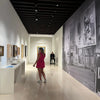
I often tell my guests that the Museu Picasso is unique because it focuses on these early, vulnerable years. It’s housed within five spectacular medieval palaces on Montcada Street—a setting that is, in itself, a masterclass in Catalan Gothic architecture.
Inside the Museu Picasso: My "Must-See" Collection Highlights
The collection holds over 4,000 works, but if you are short on time, focus on a few such as:
1. The Formative Years (Malaga & Barcelona)
"Portrait of Aunt Pepa" (1896): Considered one of the greatest portraits in Spanish art history. Picasso painted this at only 14, demonstrating absolute mastery of classical technique. "Science and Charity" (1897): This large-scale social realist painting represents his peak as a "traditional" painter before he began to break the rules.
2. The Blue Period (Melancholy and Shadows)
"The Motherhood" (1903): This work captures the essence of the Blue Period—sadness and social marginalization, all bathed in cold blue tones. "The Madman" (1904): A haunting watercolor that shows his focus on the outcasts of society during his time in Barcelona and Paris.
3. The Rose Period & Transition
"The Harlequin" (1917): Although painted later, this work symbolizes his return to more classic, circus-themed figures with softer lines, reflecting a more settled period in his life.
4. The "Las Meninas" Series (Reinterpreting the Masters)
This is the "crown jewel" of the museum. In 1957, Picasso painted 58 interpretations of Velázquez's masterpiece. "Las Meninas (Group)" (1957): The largest of the series. It shows how Picasso dismantled space and light to create something entirely new. "The Infanta Margarita Maria" (1957): A portrait showing his use of vibrant color and geometric deconstruction.
5. Late Works (The Final Explosion)
"Painter Working" (1964): In his later years, Picasso’s style became frantic and almost "childlike" in its freedom, reflecting his lifelong obsession with the act of creation itself.
Expert Tips: How to Visit the Picasso Museum Like a Pro
In my 25 years of organizing tours for American travelers, I’ve learned that a bad logistical plan can ruin even the best museum experience. Here is how to handle the Picasso Museum correctly:
Book in Advance (Mandatory): Do not show up expecting to buy a ticket at the door. Tickets are released on the official website several weeks in advance. For peak season (May through September), I recommend booking at least 14 days out.
The "Golden Hour": Most tour groups arrive between 10:00 AM and 1:00 PM. In my experience, the best time to visit is after 3:30 PM. The light in the courtyards is beautiful, and the galleries are significantly quieter.
Thursday Evenings: If you are on a budget, the museum offers free entry on Thursday afternoons starting at 4:00 PM (booking still required). However, be warned: it gets very crowded. For a relaxed experience, stick to a paid morning or late afternoon slot.
Duration: Allow yourself at least 90 minutes for the galleries and another 20 minutes to admire the architecture of the palaces.

Beyond the Museum: Walking the Streets of the Gothic Quarter
While the museum is the crown jewel, Picasso’s story spills out into the streets. He frequented Els Quatre Gats, a café modeled after Le Chat Noir in Paris, where he had his first solo exhibition.
If you want to skip the stress of navigating the crowds and truly connect with the history of the Gothic Quarter and Picasso’s life, we’ve designed the perfect experience. For those looking to plan their time in Barcelona effectively, our guided walk explores the hidden corners where the artist found his inspiration

At Letango Tours, our private itineraries pairs the museum visit with a walk through the hidden corners where Picasso lived and worked. We handle the tickets, the timing, and the storytelling, so you can focus entirely on the art.
If your journey continues beyond the life of Pablo, I invite you to explore my other curated Barcelona Private Tours, or dive deeper into the magic of the City of Barcelona through our dedicated travel guides. We make the complex simple, so your 48 hours in Catalonia are nothing short of a masterpiece.
- Carlos Galvin

Comments 0