
Ernest Hemingway in Madrid: The City That Taught Him to Write

There's a question I get from clients who love Hemingway and are coming to Madrid for the first time. They want to know which bar to go to, which table to sit at, and what to order. And I understand the impulse — but I always tell them the same thing: the places matter less than understanding why he needed them.
Hemingway arrived in Madrid in the 1920s as a young journalist still figuring out what kind of writer he wanted to be. He left — repeatedly, obsessively, over the following two decades — as someone who had found the city that showed him. Not Paris, not Key West, not Havana, Madrid. A capital on a high Castilian plateau with a particular quality of light and a particular relationship with time that suited the way he wanted to see things.
The places where he drank, wrote, and filed dispatches under bombardment are still there — quieter now, and more layered with time, but still entirely themselves. For those who want to walk these streets properly, we know them well.
At a Glance:
- Why Hemingway and Madrid Are Inseparable
- The Gran Vía: A Boulevard Under Fire
- How He Used the City: Bars as a Method of Work
- Death, Beauty, and the Madrid He Recognized
- The Places That Remain
- Sobrino de Botín: Where the Novel Ends
- Walk Madrid with Letango Tours
- FAQs: Your Hemingway Madrid Questions Answered
Why Hemingway and Madrid Are Inseparable
Hemingway considered Madrid the most authentically Spanish city in the country. Not Seville, not Granada, not Barcelona — cities that had more obvious seductions to offer a foreign writer. Madrid, he felt, was the real thing: undecorated, unsentimental, and entirely itself.
He loved it for exactly the things that disappear the moment a city decides to make itself easier. Its late hours. Its refusal to hurry. Its bars where serious conversations lasted until three in the morning and nobody apologized for it. Its insistence that eating and drinking were worthy of the same attention as any other art form.
Matar la noche — killing the night — was already embedded in Madrid's vocabulary long before Hemingway arrived. The phrase dates to the Siglo de Oro, when the capital's taverns and theaters turned the act of staying out until dawn into something closer to a civic value. "Nobody goes to bed in Madrid until they have killed the night," someone once wrote — and whether the line is borrowed or invented, it has always been true. Centuries later, La Movida Madrileña turned that same impulse into outright cultural rebellion. Hemingway landed somewhere in the middle of that tradition and recognized it immediately as his own.
The Gran Vía: A Boulevard Under Fire
Madrid's great early 20th-century boulevard was completed just in time for a war. During the Siege of Madrid — which lasted from 1936 to 1939 — the Gran Vía was shelled so regularly by Nationalist artillery that Madrileños nicknamed it la avenida del obús: Howitzer Avenue. Hemingway walked it daily.
He was staying at the Hotel Florida, which stood where a modern commercial block now stands — a small plaque on the wall is the only trace. The entire international press corps was based there: Martha Gellhorn, John Dos Passos, Robert Capa, Gerda Taro. Most of them evacuated as the bombardment intensified. Hemingway stayed and kept filing.
What that period did to his writing is worth understanding before you walk the street. The prose he produced during the siege has a quality of compressed attention that is unlike anything he wrote elsewhere. Short sentences. No wasted words. The feeling that each detail matters because time is genuinely uncertain. Critics have argued for decades about the sources of that style. Having stood on the Gran Vía knowing what happened there, I think Madrid itself was a large part of the answer.
Directly opposite where the Hotel Florida once stood, the Palacio de la Prensa still survives — its neoclassical facade exactly as it was, almost entirely unnoticed by the people walking past it every day. It is one of the most historically loaded buildings in the city.
Curiosity worth knowing: Room 108 of the Hotel Florida was shared by Hemingway and Martha Gellhorn, the war correspondent who became his third wife. Their relationship began in the bar downstairs. Gellhorn later wrote about this period with a clarity and precision that, in several respects, surpasses Hemingway's own account. Worth reading alongside For Whom the Bell Tolls.

How He Used the City: Bars as a Method of Work
Hemingway's relationship with Madrid's bar culture was not recreational. It was professional. He wrote at café tables, conducted interviews in tascas, gathered intelligence, and filed dispatches from wherever he happened to have good light and a reliable supply of something worth drinking. The bars were his office, his research method, and his subject matter simultaneously.
One bar in particular became his most faithful haunt — the place he returned to most consistently across multiple visits and multiple decades. He had a regular table. The staff knew his order. In a city that values loyalty to its neighborhood bar above almost everything, that constituted the highest form of integration.
Another, on the Gran Vía, was a different kind of place. Art deco interior, cocktails, a mixed clientele that during the Civil War included Republican officers, international journalists, and — as the evening progressed — others. Hemingway used it as a meeting point, a place to gather the kind of information that doesn't appear in official dispatches. There are things still on offer there that don't appear on any menu — details passed down by word of mouth for generations and genuinely worth knowing about.
Then there is a sherry bar a short walk away that serves nothing but fino, manzanilla, amontillado, oloroso, and palo cortado — poured from barrels, written in chalk on the wooden counter. It has maintained a rule against cameras since the Civil War that has never been lifted. Order a glass. Do not take out your phone. Some places survive precisely because of what they refuse to become.
If you want to understand the full city that shaped all of this, our 48 Hours in Madrid guide maps the neighborhoods, museums, and restaurants that define Madrid today.

Death, Beauty, and the Madrid He Recognized
There is a thread connecting the bullfights, the flamenco, and the Civil War dispatches that runs through everything Hemingway wrote about Spain. He understood — and Madrid confirmed for him — that the most serious art is made by people who have looked directly at mortality and refused to look away.
On Plaza de Santa Ana, a flamenco venue whose hand-painted ceramic facade — installed in 1914, scenes from Andalucía in blue and white — is among the most striking in the city. Hemingway came here in the evenings to hear cante jondo, deep flamenco song, on the nights when the Civil War allowed. His relationship with flamenco was serious and considered: he understood it as part of the same cultural universe as bullfighting — an art form that dealt directly with tragedy, beauty, and mortality. It was research and devotion simultaneously.
Death in the Afternoon, his extraordinary meditation on bullfighting, could only have been written by someone who had spent serious time in Madrid — not just watching fights, but absorbing the city's particular refusal to sentimentalize experience. The Barrio de las Letras, where Cervantes died in 1616 and where Hemingway spent most of his evenings, is literally paved with quotations from Spain's greatest writers, set into the cobblestones beneath your feet. Walk slowly along Calle Huertas and look down — most visitors walk straight over them without noticing. It is one of the best public art projects in Madrid and costs nothing.
He understood that he was drinking in bars that had been serving writers for four centuries and that this continuity was not incidental but essential. Hemingway was not the first — and not the last. If you want to follow that thread further, our blog traces other artists and writers who left their mark on this city, including Cervantes in Madrid.

The Places That Remain
What is remarkable about Hemingway's Madrid is how much of it still exists. The bar where he wrote every morning, the venue on the Gran Vía where he gathered intelligence over cocktails, the flamenco stage on Plaza de Santa Ana, the sherry bar that has kept its Civil War rule against cameras intact — all still operating, all substantially unchanged. This is not common. Most cities have renovated away their 20th-century past in the name of modernity or tourism. Madrid has done this in some neighborhoods and refused to do it in others, and the neighborhoods where it refused happen to be exactly the ones Hemingway inhabited.
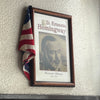
There is a photograph of him at his regular table in one of these bars — not prominently displayed, not labeled, positioned exactly as it would be in any neighborhood place that happened to have a photo of a regular customer. Most visitors walk straight past it. Knowing where it is, and why it matters, is the kind of thing that comes from walking these streets with someone who has spent years earning the details — which is exactly what our Hemingway Madrid tour is built around.
Sobrino de Botín: Where the Novel Ends
Sobrino de Botín holds the Guinness World Record as the oldest restaurant in the world, in continuous operation since 1725. Its wood-fired horno de asar — the original oven, still in daily use — produces cochinillo asado that has made it famous across three centuries.
Hemingway ends The Sun Also Rises with his protagonist Jake Barnes eating roast suckling pig here and drinking three bottles of Rioja Alta. "It was one of the best restaurants in the world," he wrote. The setting is unchanged: vaulted brick cellars, wooden beams, ceramic tiles, and the smell of the wood fire drifting up from the kitchen.
Two things worth knowing before you go: the young Francisco Goya worked here as a waiter before his career as a painter took off — the restaurant has the documentation to prove it. And the roasting oven has never once been extinguished since 1725. It has been burning continuously for 300 years.
Some things in this city simply refuse to stop.
Walk Madrid with Letango Tours
The neighborhoods in this article are walkable. The bars are open to anyone who walks through the door. But the stories that give them their full weight — the room where Hemingway filed dispatches under bombardment, the table where a photograph still hangs that most visitors never find, the specific things available at certain places that aren't written anywhere — those are the details that take years to collect and that change what a city means when you stand inside it.
For those who want to go further into Madrid's art, the Prado is the natural next stop — Goya and Velázquez in the same building, and a version of the Spain that Hemingway was trying to understand hanging on every wall. Our Prado Museum Private Tour takes you through the rooms that matter most, with the context that turns great paintings into something you actually carry with you.
There are details in this story that don't exist in any guidebook — and a few that we've spent years earning the right to share. If you want to walk this Madrid properly, Contact us and we'll put together something built around you.
FAQs: Your Hemingway Madrid Questions Answered
Which is the most important stop on a first visit to Hemingway's Madrid? The bar on Plaza de Santa Ana that was his most faithful haunt — virtually unchanged since his time, with a photograph of him at his regular table still on the wall. It is not prominently displayed. Ask the barman where it is; they'll point it out if approached properly.
Where can I see Hemingway's most important works in person? Hemingway's connection to Madrid lives in the streets and bars rather than in any single archive, but the Civil War context is inseparable from For Whom the Bell Tolls and his journalism from the siege. The Museo Reina Sofía houses Guernica — Picasso's response to the same war Hemingway covered — and seeing it puts his writing in immediate physical context. For his books, any good bookshop in the Barrio de las Letras will have Spanish editions alongside the originals.
Is there a specific place in Madrid where I can still feel Hemingway's presence today? The sherry bar off Plaza de Santa Ana that has kept its rule against cameras since the Civil War and has never lifted it. The room looks exactly as it did when Hemingway drank there — same barrels, same chalk menu, nothing altered or romanticized for visitors. That is the rarest thing in any city, and it is the closest thing Madrid has to a time capsule of his world.
How did the Spanish Civil War affect Hemingway's writing? Profoundly and specifically. The prose he produced during the Siege of Madrid — filed from his hotel on the Gran Vía as shells landed in the street outside — has a compressed, precise quality that critics have long attributed to the experience of writing under genuine threat. Short sentences. No wasted words. The feeling that each detail is earned. Standing on that boulevard knowing what happened there, the connection between the place and the style becomes very clear.
Is this interesting for travelers who haven't read much Hemingway? Completely. The Civil War history alone — the shelled Gran Vía, the site of the press hotel, the building where correspondents transmitted their dispatches — is extraordinary regardless of any literary interest. And the bars themselves are among the most historically intact in Europe. You don't need to have read a word of Hemingway to find them remarkable.
Do I need to book Sobrino de Botín in advance? Always. The restaurant is well known enough that spontaneous visits rarely work, particularly for dinner or weekends. Ask specifically for a table in the basement vaulted cellar — the oldest and most atmospheric part of the building, unchanged since the 18th century.
What is the best time of day to walk this route? Start on the Gran Vía in the late morning when the light is good and the street is at its most legible, spend the afternoon in the Barrio de las Letras, and arrive at the sherry bar in the early evening when there is still time to talk properly. End with dinner at Botín. The route follows the natural rhythm of Madrid, which means it gets better as the evening advances.
How does a private Hemingway experience with Letango work? We assign a guide with deep knowledge of both Hemingway and Madrid's Civil War history. Everything is arranged in advance — restaurant reservations, access to the things that aren't written on any menu, and the stops that don't appear in any guidebook. Get in touch to start planning.
What three things make this Madrid unlike anywhere else? One experience: the walk from the Gran Vía to the Barrio de las Letras at dusk, when the light turns Castilian gold and the city moves toward the evening with the unhurried confidence of a place that has been doing this for centuries. One food: cochinillo asado at Botín, roasted in an oven that has been burning since 1725. One moment: sitting with a glass of fino in a bar that looks exactly as it did when Hemingway was alive, in a city that still knows how to kill the night.
What should I read before visiting Hemingway's Madrid? The Sun Also Rises for the emotional landscape — Spain as Hemingway first experienced it. For Whom the Bell Tolls for the Civil War context that permeates the entire route. And Martha Gellhorn's dispatches from the siege, which in several respects are a sharper account of what happened on the Gran Vía than Hemingway's own. Reading both side by side before you walk the boulevard changes what you see when you get there.
Every article here reflects 25+ years on the ground—I've personally visited every destination, conducted the research, and taken these photos. AI helps us shape the writing and ensure clarity. The expertise? That's all mine.
- Carlos Galvin

Comments 0