
Seville in 48 Hours: An Insider's Guide to Spain's Most Captivating City

The first time I walked a client through the gates of the Real Alcázar just as the afternoon light turned amber, she stopped mid-sentence and went silent. That's Seville. It does that. For all the words written about this city, nothing quite prepares you for the moment the place takes hold of you — and in my experience, that moment arrives faster here than almost anywhere else in Spain.
I've been bringing American clients to Seville for over two decades, and the response is always the same: people arrive with a checklist and leave with a feeling. The cathedral, the Alcázar, the tapas, the flamenco — yes, all of it, and more. But what Seville actually gives you, if you move through it at the right pace, is a sense of how deeply the past lives inside the present. This is a city where Moorish palaces were not demolished but absorbed, where Jewish
and Christian and Arabic traditions folded into each other over centuries, and where the result of all that layering is unlike anything else in Europe. Here is how I'd spend 48 hours in it.
At a Glance:
- The Alcázar and the Cathedral: Where Seville's Story Begins
- Barrio de Santa Cruz: The Art of Not Rushing
- Triana: The Seville That Belongs to Sevillanos
- What to Eat — and Where
- What Most Visitors to Seville Never Find
- A Few Things Worth Knowing Before You Arrive
- Frequently Asked Questions
The Alcázar and the Cathedral: Where Seville's Story Begins
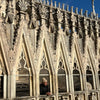
Start where the city's meaning is most concentrated. The Cathedral of Seville is the largest Gothic cathedral in the world — a fact that sounds predictable until you're standing inside it and the scale defies your ability to process it properly. What moves my clients most is rarely the nave itself; it's the tomb of Christopher Columbus, carried on the shoulders of four sculpted kings representing the crowns of Castile, León, Aragón, and Navarra. Whether Columbus is truly interred inside remains a question historians have argued over for centuries. I find that ambiguity only adds to the atmosphere.
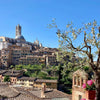
Climb La Giralda — the former minaret of the mosque that stood here before the Reconquista, transformed into the cathedral's bell tower in the twelfth century. The ascent is a ramp, not a staircase: horses once rode to the top to allow the muezzin to call the faithful to prayer without dismounting. The view from the summit gives you Seville's entire layout before you begin exploring it at street level — a useful orientation before the city's streets absorb you.
Directly adjacent stands the Real Alcázar, and I never rush anyone through it. The Mudéjar architecture of the Palacio del Rey Don Pedro is among the most accomplished in all of Europe — fourteenth-century Spanish Christian kings commissioning Moorish craftsmen to build a palace for a Christian court, producing something that belongs to no single tradition and is precisely extraordinary because of it. The gardens alone can absorb an hour without effort.One thing I always tell clients: get there early—before 10am if possible—and make sure to book your tickets ahead of time, especially in spring and fall when you should reserve at least a week in advance.
If you'd prefer not to manage logistics or stand in any line at all, our - Sevilla Cathedral and Alcazar Skip the Line Private Tour, does exactly that. The depth a specialist guide adds to both monuments is significant — what feels like stone and tilework becomes a story you carry with you for years.

Barrio de Santa Cruz: The Art of Not Rushing
From the Alcázar's eastern exit, you step almost directly into the Barrio de Santa Cruz — the old Jewish quarter, a tangle of narrow whitewashed streets designed to disorient. This was intentional: the labyrinthine layout was built to provide shade and slow the summer wind. Getting mildly lost here is not a failure of navigation. It is the experience.
Walk along Calle Agua, which runs tight against the Alcázar's outer wall. Iron grilles at intervals reveal glimpses of the palace gardens on the other side — one of those small Seville pleasures that the guidebooks mention in passing and that I have never stopped finding arresting, no matter how many times I've walked this street. Stop at the Plaza de Santa Cruz afterward and sit on a bench. The orange trees here are old. The light through them in late afternoon is something particular.
One detail I always mention: those oranges are not for eating. The bitter Seville orange is harvested almost entirely for export to Britain, where most of it becomes Seville orange marmalade. This fact invariably produces a satisfying pause in my clients. The city that produces some of Spain's greatest gastronomy ships its own fruit abroad as preserves. Seville, as ever, has its own logic.
Triana: The Seville That Belongs to Sevillanos
Cross the Triana Bridge — officially the Puente de Isabel II — and you step into a different Seville. Not one without tourists; that's no longer entirely true of any neighborhood in a city this well-known. But Triana has an identity so distinctly its own that visitors who make it here tend to behave differently: they slow down, they sit longer at the bar, they wander streets that don't appear on any tourist map. The neighborhood's roots run deep into flamenco, ceramics, and a fierce local pride that the people of Triana still carry with conviction. It is, simply, the side of the river that deserves more time than most visitors give it.
The Mercado de Triana, housed inside the walls of what was once the castle of the Inquisition, is a proper working market: fish vendors, butchers, olive sellers, and a handful of excellent bars where you can stand at the counter and eat tortillitas de camarones — small, crisp shrimp fritters that belong specifically to this corner of Andalusia and that I could eat every day without complaint. Arrive before 11am when the market is alive but not yet overwhelmed.

Triana's Ceramics: Where the Craft Is Still Alive
Walk afterward along Calle Alfarería. The ceramics tradition in Triana is more than five centuries old and its origins are Arab: it was Moorish craftsmen who established the first kilns here, and their techniques — copper oxide for the greens, manganese for the blacks, cobalt for the deep blues that define the Sevillian azulejo — passed from generation to generation and are still in active use today. At Cerámica Santa Ana, founded in 1870 and still in the same family, you can watch tiles being painted by hand using the same geometric and figurative designs that cover the benches of the Parque de María Luisa and the facades of buildings across Andalusia. This is not a souvenir shop: it's a working studio where what you're buying was made twenty feet from where you're standing.
For something even more rooted in the origins of the craft, the Centro Cerámica Triana — housed inside the ruins of the castle of the Inquisition, the same building that holds the market — contains fifteenth-century kilns excavated in situ, exactly where they were built and used. Standing above those original ovens, with the history of the craft literally beneath your feet, gives you a perspective on Triana's ceramics that no shop can provide. Very few American visitors find their way here. That's precisely why it's worth going.

What to Eat — and Where
Seville is one of the great eating cities of Spain, and it's largely unpretentious about that fact. The food culture here is built around tapas as a social ritual — you move between bars, you stand at counters, you eat small portions of very good things in quick succession. This is not a tourist format. This is how Sevillanos eat.
For something honest and affordable: Casa Morales, on Calle García de Vinuesa, a short walk from the Cathedral. It opened in the nineteenth century as a wine warehouse and still looks the part — enormous clay tinajas of wine embedded in the walls, hand-carved jamón at the counter, clientele that is overwhelmingly Sevillano. Order the espinacas con garbanzos — spinach with chickpeas, a Moorish inheritance that has been on this menu for generations — alongside a cold manzanilla from Sanlúcar de Barrameda.
For a meal worth spending more on: La Azotea, specifically the branch on Calle Jesús del Gran Poder. Chef José Manuel Córdoba works with Andalusian product and applies technique that is confident without being showy. The local ingredients — Ibérico pork, fresh fish from the Atlantic coast, seasonal vegetables from the Guadalquivir valley — are treated with the kind of respect that makes you understand where you are. Reserve ahead; the room is small and Sevillanos fill it.
The drink to order in Seville is not sangria — please — and not even red wine. It is fino sherry: cold, bone-dry, faintly saline, served in a proper copita alongside something fried. Order it the way an Andalusian orders it: quickly, without ceremony, before it has a chance to warm in your hand. This is the taste of Seville, and nothing else comes close.

What Most Visitors to Seville Never Find
The Museo de Bellas Artes sits in a converted convent near the Alameda de Hércules and is, in my honest view, one of the most overlooked major art museums in Spain. The Sevillian school of painting — Zurbarán, Murillo, Valdés Leal — is extraordinary and almost entirely overshadowed by the city's architectural giants. Walking through a room of Zurbarán's monks in near-silence, a shaft of light falling from a high convent window above them, is a genuinely moving experience. Admission is free for EU citizens and under €2 for everyone else.
My most specific insider tip for Seville: the Palacio de las Dueñas. This is the private residence of the House of Alba, opened to the public only in 2016. The poet Antonio Machado was born within these walls; the collection contains some of the finest private art in Andalusia; and because it remains unknown to most international visitors, you walk through it slowly, without competing for space in front of anything. This is the kind of discovery that makes Seville feel like it's still giving you something.
For those who find that Seville opens up a deeper appetite for Andalusia as a whole — and it will — I’ve written a broader guide, Andalusia Distilled: An Insider’s Look at Spain’s Most Captivating Corner, which I think provides useful context for understanding where Seville sits in the larger picture And if you're considering a longer journey through the south, our -Andalusia Hill Towns and Cities 7-Day Package- is the itinerary I designed for clients who want to understand the full story of this corner of Spain — not just its capital.

A Few Things Worth Knowing Before You Arrive
Seville rewards walking, but the distances add up and the heat, from June through September, is serious. Temperatures regularly reach 104°F (40°C) in July and August, and the streets empty properly between two and five in the afternoon. Work with this rhythm, not against it: eat a long lunch, rest, and go back out at six when the light changes and the city comes fully alive again.
The months I recommend most consistently are March and April — the orange trees are in bloom, the temperatures are ideal for covering ground, and the city has real energy without the summer crush. October is my second choice: quieter, golden, still warm enough for dinner outdoors. Avoid July and August unless you handle extreme heat well.
Seville has a way of opening up an appetite for the rest of Andalusia — and the region rewards that curiosity. An hour and a half south by train, Málaga is a city that surprises even seasoned travelers: a working port with a genuine old quarter, exceptional food, and a museum culture that punches well above its size. For anyone with an interest in art, Picasso's Málaga is a thread worth pulling — the city shaped him in ways that are still visible if you know where to look.
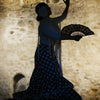
There is one event that transforms Seville in a way no description quite does justice to, and that's worth knowing about even if your visit doesn't coincide with it: the Feria de Abril. Two weeks after Holy Week, on a fairground south of the river, the city constructs a city within the city — hundreds of striped casetas lit by thousands of lanterns, horses moving in perfect paso through the avenues, and women in hand-sewn flamenco dresses of polka dots and cascading ruffles that were commissioned from dressmakers in Triana months in advance. The music and the light last until dawn for a full week. What began in the nineteenth century as a livestock fair has become one of the most singular cultural spectacles in Europe — and one of the most genuine expressions of Sevillian identity anywhere in Spain. If your dates don't align with the Feria, it's still worth knowing that this is the city behind the city you're visiting. That spirit doesn't disappear when the casetas come down.
One last thing: Seville is a city that responds to attention. The slower you move through it, the more it gives you. Forty-eight hours, spent with intention, will leave you wanting to come back — and when you're ready to plan yours, contact us, and we'll build it around you
Frequently Asked Questions
What are three experiences, foods, or cultural highlights I shouldn't miss in Seville? For the experience: spend an evening at Casa de la Memoria, a small tablao in the Barrio de Santa Cruz where the flamenco is performed by serious artists in an intimate setting — this is not a dinner show, it's the real thing. For the food: order tortillitas de camarones at any bar in Triana alongside a cold copa of fino sherry — the combination is specific to this corner of Andalusia and unlike anything you'll find elsewhere. For the cultural moment: stand in the courtyard of the Real Alcázar in the late afternoon, when the light shifts across the Mudéjar tilework from gold to amber, and you'll understand in an instant what makes Seville unlike any other city in Europe.
What is the best time of year to visit Seville? March and April are my first recommendation without hesitation — the orange trees are in bloom, the temperatures are ideal for walking, and the city has genuine energy without the summer crowds. If your dates fall during Holy Week (Semana Santa), understand that this is one of the most extraordinary spectacles in Spain, and also one of the most crowded periods of the year — plan well in advance. October is my second choice: quieter, beautifully lit, and still warm enough for dinner outdoors. I'd avoid July and August unless you're comfortable with extreme heat; temperatures regularly hit 104°F and the city empties at midday.
How many days do I really need in Seville? Forty-eight hours gives you enough time to cover the essential monuments, eat well, explore Triana, and begin to feel the rhythm of the city. Three full days lets you go deeper — the Museo de Bellas Artes, the Palacio de las Dueñas, a proper evening of flamenco, and a day trip to nearby Carmona or the sherry country around Jerez de la Frontera. If Seville is your only destination in Spain, I'd argue strongly for a minimum of three nights.
How do I get to Seville from Madrid or other Spanish cities? The high-speed AVE train from Madrid to Seville takes approximately two and a half hours and runs multiple times daily — it's comfortable, reliable, and the most sensible option by some distance. From Barcelona the journey is around five and a half hours. From Málaga, you can reach Seville in about two hours by train. Seville also has an international airport, though most of my American clients fly into Madrid or Barcelona and travel south by rail, which I think is the better experience.
Do I need to book the Alcázar and Cathedral in advance? Yes — without exception, and I say that from experience. Both the Cathedral and the Real Alcázar sell out regularly, particularly in spring and fall, and I've seen clients lose half a day to the standby queue or miss entry entirely. Book online at least a week in advance, and two weeks ahead during peak season. If you're joining a private tour, your guide handles access — which is exactly one of the reasons I always recommend going with a specialist rather than booking independently.
What are the most common mistakes tourists make in Seville? The first is underestimating the heat and trying to sightsee at midday in summer — the city slows down for a reason, and fighting it only makes the experience worse. The second is staying entirely in the tourist triangle — Cathedral, Alcázar, Santa Cruz — without ever crossing the river into Triana, which is where you encounter a genuinely different and more local side of Seville. The third, and I'll say it plainly: ordering sangria. Ask for fino, manzanilla, or a rebujito (fino and lemonade, the drink of Seville's spring festival) instead.
What neighborhood should I stay in for 48 hours in Seville? For a first visit, the Barrio de Santa Cruz or the area immediately around the Cathedral places you within walking distance of all the major monuments and ideally positioned to get out early before the day-trippers arrive. El Arenal, just west of the Cathedral, is slightly quieter and equally well-located. Triana has excellent hotels now and staying there gives you a more local atmosphere with a single bridge between you and the historic center — an option I increasingly recommend to clients who've been before and want a different perspective.
Is Seville suitable for solo travelers? It's one of the best cities I know for traveling alone. The bar culture actively encourages standing at a counter and striking up a conversation; the city is compact and walkable; and the pace is unhurried enough that you never feel the pressure to keep moving. Solo travelers in Seville consistently tell me they spoke to more people — locals and other visitors alike — than anywhere else on their trip. The city has a sociability built into its architecture.
What should I pack for a trip to Seville? Comfortable walking shoes are non-negotiable — you will cover several miles per day on stone and cobblestone. If you're visiting in summer, pack light breathable clothing, a hat, and high-factor sunscreen; Seville's heat is direct and intense. In spring or fall, bring a light layer for evenings. Women visiting churches should carry a scarf or cover-up for shoulders. One personal recommendation that I give every client regardless of destination: pack less than you think you need. Seville rewards the traveler who moves through it easily.
Is Seville accessible for travelers with mobility considerations? The historic center is largely flat, which helps considerably. The challenge is the cobblestones — many streets in the Barrio de Santa Cruz and around the Cathedral are uneven, and some can only be navigated on foot. The Real Alcázar has improved its accessibility significantly in recent years, and the Cathedral can be visited with mobility aids, though La Giralda's ramp, while not steep, is long. I always advise clients with specific needs to contact me directly before their trip so we can plan accordingly and ensure nothing gets missed.
Every article here reflects 25+ years on the ground—I've personally visited every destination, conducted the research, and taken these photos. AI helps us shape the writing and ensure clarity. The expertise? That's all mine.
- Carlos Galvin



Comments 0