
48 Hours in Milan: A Curator's Guide to Italy's Design Capital

Milan is the only city I know where the most important painting in Italy is hanging in a room most visitors walk past. Not because it's hidden — the Pinacoteca di Brera is right there, in the middle of one of the city's most beautiful neighborhoods. Just because Milan doesn't ask you to pay attention. It waits to see if you will.
I've designed itineraries here for clients who have been to Florence, to Rome, to Venice — and watched them leave more surprised by Milan than by any of those. Forty-eight hours, paced correctly, is enough to understand why.
At a Glance:
- The City Beneath the Surface
- Day One: The Historic Center
- The Pinacoteca di Brera — Milan's Greatest Museum
- The Brera Neighborhood — The Milan You'll Want to Live In
- Where to Eat in Milan
- Day Two: The Navigli and a Different Kind of City
- The Detail Most Visitors Miss
- Planning Your 48 Hours in Milan
- FAQs
The City Beneath the Surface
Milan doesn't seduce you quickly. On a gray Tuesday morning it can feel relentlessly purposeful — more Frankfurt than Florence. But this is a Roman city, a medieval city, a Renaissance city, and the capital of Italy's twentieth-century modernism, all layered into each other. Leonardo da Vinci lived and worked here for nearly 18 years. Once you understand that layering, the city's reserve reveals itself as depth.
Day One: The Historic Center
The Duomo — Go at 8 a.m. or Go at Dusk
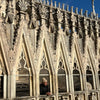
Arrive in the Piazza del Duomo early, before the tour groups have assembled. The Duomo di Milano, begun in 1386 and completed — technically — in 1965, is one of the most extraordinary Gothic structures ever built. Its facade of white Candoglia marble is carved into 135 spires and more than 3,400 statues, added by generation after generation of Milanese over nearly six centuries. Stand still and look up. You are looking at what a city decided to believe in for 600 years.
Buy rooftop access and walk among the spires at close range — on a clear morning you'll see the Alps. Then, back at street level, step into the Galleria Vittorio Emanuele II, opened in 1877 and the world's oldest shopping arcade. Order a Campari Shakerato at Caffè Zucca, which has operated there since 1867.
A Short Detour: The Finger
A five-minute walk south from the Galleria brings you to Piazza degli Affari, where Maurizio Cattelan's eleven-meter Carrara marble sculpture L.O.V.E. stands directly in front of the Italian Stock Exchange. From a distance it looks like a defiant middle finger — look closer and you'll see the other four have been cleanly severed. The original gesture was the Fascist Roman salute that the Rationalist palazzo behind it, built in 1932, was designed to celebrate. Cattelan installed the work in 2010; it was meant to remain two weeks, and Milan kept it permanently.

The Last Supper — Book Three Months Ahead
A 20-minute walk west of the Duomo, in the refectory of Santa Maria delle Grazie, Leonardo da Vinci's The Last Supper occupies the entire end wall of a low, climate-controlled room. You enter in groups of 25, for exactly 15 minutes. The painting — monumental, fragile, executed onto the plaster between 1495 and 1498 — reads entirely differently from any reproduction.
Book two to three months in advance through the official Cenacolo Vinciano booking portal. Walk-ins are effectively impossible. If managing the booking from the US feels complicated, feel free to contact us — skip-the-queue arrangements included.
And here's the detail almost no American visitor knows: directly across the street from Santa Maria delle Grazie, at Corso Magenta 65, lies La Vigna di Leonardo. In 1498, Ludovico Sforza gave Leonardo a small vineyard as part of his payment for the Cenacolo. The vines you see today descend directly from those he tended. I take clients here straight after the painting — the transition is one of the most quietly powerful sequences in Milan.
The Pinacoteca di Brera — Milan's Greatest Museum
Housed in a seventeenth-century Jesuit palazzo in the Brera district, the Pinacoteca di Brera holds a collection that would be considered a national treasure in any European capital. What makes it remarkable, beyond the quality of the work, is the access: almost no queues, generous galleries, and the kind of quiet in which paintings actually reveal themselves.
Mantegna's Dead Christ — painted around 1480, radical in its foreshortening — is the room I always go to first. After that, the collection deepens: Raphael, Caravaggio, Bellini, Tintoretto, Hayez. Plan two hours minimum. Clients who have been to the Uffizi and the Louvre walk out of here realizing they had never even heard of this museum. The same quality of attention rewards travelers in our guide to 48 hours in Naples, a city that asks the same of you.

The Brera Neighborhood — The Milan You'll Want to Live In
The streets surrounding the Pinacoteca are the most seductive corner of central Milan. Brera is a neighborhood of independent bookshops, antique dealers, small galleries, and cafés that have not been redesigned for tourism. Walk Via Fiori Chiari and Via Madonnina slowly. There's a small morning market on Via Formentini — arrive before 10 a.m.
For coffee, find a bar without an English menu. Order a ristretto and stand at the counter — sit down at a table and you'll pay a third more. Before you leave the neighborhood, look for Pettinaroli on Via Brera, a stationer that has been printing and binding paper goods here since 1881. If you want to bring back something from Milan that has nothing to do with fashion, this is where to go

Where to Eat in Milan
Milan's gastronomic identity runs on butter rather than olive oil, on risotto rather than pasta. The dish I recommend without hesitation is risotto alla Milanese: rice slow-cooked in veal stock and saffron, finished with bone marrow and aged Parmigiano Reggiano. If you try only one regional dish on this trip, it should be this one.
For a proper Milanese lunch, Trattoria Milanese on Via Santa Marta has been operating since 1933 — dark wood, white tablecloths, a menu that hasn't needed to reinvent itself. For dinner worth dressing for, Enrico Bartolini al Mudec — three Michelin stars, inside the Mudec contemporary art museum in the Tortona design district — is one of the finest tables in northern Italy. For something simpler, walk from the Duomo to Luini on Via Santa Radegonda: since 1949 they have made one thing, panzerotti, eaten standing on the street for under five euros.

Day Two: The Navigli and a Different Kind of City
Morning: The Arco della Pace and the Cimitero Monumentale
Day Two is best started somewhere quiet. Take a short taxi to the Arco della Pace at the western edge of Parco Sempione — Napoleon's triumphal arch, completed in 1838, with the Castello Sforzesco visible at the far end of the park. Just across the street on Corso Sempione is Égalité, a small French-style bakery and coffee shop where I always stop with clients before the day begins. A coffee here, with the morning light on the marble of the arch, is one of the city's quiet pleasures.
From the arch, a short taxi brings you to the Cimitero Monumentale, opened in 1866. It is not a sad place. It is an open-air sculpture garden — Liberty, Symbolist, and Art Deco tombs designed by some of Italy's most important architects. Among the most famous is the tomb of Davide Campari, whose family invented the aperitivo culture that defines the way Milan still drinks today. There's a quiet logic to standing here in the morning, knowing you'll end the day on the same terrace where his bottles still pour.

Evening: The Navigli and the Aperitivo
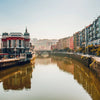
The Navigli district, built along Milan's last surviving canals, is a different city from the center: younger, less formal, more alive after 6 p.m. Leonardo da Vinci helped engineer parts of these canals during his years in Milan. Walk the Naviglio Grande when the aperitivo bars open and the light turns amber.
Here's something most American visitors don't know: the modern aperitivo was invented in Milan. The custom was perfected in the late nineteenth century at Camparino in the Galleria Vittorio Emanuele II, where Verdi and Toscanini drank Campari sodas under the same liberty-style ceiling that's still there today. It remains the single most beautiful place in Milan to begin an evening.
Saturday mornings bring the Mercato dell'Antiquariato del Naviglio Grande, one of the best antique markets in northern Italy — arrive before 10 a.m. The Tortona design district, a short taxi ride southwest, is where Milan's global design influence actually lives. It sits naturally within a wider Italian journey where Milan is a first chapter rather than the whole story.
The Detail Most Visitors Miss
Milan's cortili — the interior courtyards concealed behind the heavy doors of Renaissance and nineteenth-century palazzo buildings across the historic center and Brera — are the city's most underused pleasure. Most are privately owned, but many can be seen through open gates during business hours. The contrast between the busy street and the stillness just a few meters beyond is one of the most genuinely Milanese things I know.
Planning Your 48 Hours in Milan
Two days is the minimum I'd recommend for Milan, and clients who allow a third are always glad they did. The city pairs naturally with the Italian Lakes — Como and Maggiore are under an hour away — and connects easily toward Verona, Venice, and Emilia-Romagna. If you're thinking about combining Milan with the wider north, take a look at our North of Italy private touring options. Every itinerary we build starts from a conversation.
FAQs
What are three experiences, foods, or cultural highlights I shouldn't miss in Milan?
I'd say this: walk the rooftop of the Duomo at sunrise — among the 135 spires, with the Alps visible on a clear morning, it's one of the most singular architectural experiences in Italy. At lunch, sit down to risotto alla Milanese at Trattoria Milanese on Via Santa Marta — it's been made the same way since 1933, and nothing prepares you for how right it is. And then spend a quiet hour in the Pinacoteca di Brera, in the room with Mantegna's Dead Christ. Most visitors have never heard of it. It's one of the most important paintings in Europe.
What is the best time of year to visit Milan?
April through June and September through October are the months I'd recommend without hesitation. The weather is mild, the city is in full motion, and you avoid the dead heat of July and August, when many local restaurants close and the energy drops. Milan in late September — when the fashion weeks have passed and the light turns — is genuinely beautiful. Winter is cold and gray but the museums are quiet, the Christmas markets are charming, and the city feels more like itself than at any other time.
How many days should I spend in Milan?
Two full days is the minimum I'd recommend, and three makes a meaningful difference. With two days you can cover the Duomo, the Last Supper, the Brera, and the Navigli without feeling rushed. A third day opens up the lakes — Como is 40 minutes by train — or gives you time to go deeper into the design districts and the neighborhoods that don't appear in most itineraries. For clients combining Milan with the wider north, I typically build three to four days here into the overall route.
How do I get from Milan's airports to the city center?
Milan has two main airports. From Malpensa, the Malpensa Express train connects directly to Milan Centrale station in about 50 minutes — reliable and comfortable. From Linate, the city's closer airport, city bus lines reach the center in 30 minutes or less. Taxis from either airport are metered and regulated; the fixed fare from Malpensa to the center is publicly posted. I generally advise private transfers for clients arriving with luggage and an early itinerary — it removes the variable entirely.
What should I know before visiting The Last Supper?
Book as early as possible — two to three months in advance is the realistic minimum, and slots during peak travel season fill significantly earlier than that. Entry is timed, groups are capped at 25 people, and the visit lasts exactly 15 minutes. Bring your confirmation on your phone and arrive at least 10 minutes before your slot. Photography is allowed but flash is prohibited. The experience is intimate and quiet by design — there's no rushing through, which is precisely why the booking process is strict.
What is the coffee culture like in Milan, and how should I order?
Milanese coffee culture has a specific grammar, and learning it makes the whole city feel more accessible. Order a ristretto if you want to drink coffee the way serious regulars do — it's shorter and more concentrated than a standard espresso, and it's what you'll see at the bar at eight in the morning. Stand at the counter: you'll pay less and you'll be part of the daily rhythm rather than a spectator of it. Sit at a table and the price goes up. Never ask for a café con leche — in Milan, you want a cortado if you prefer a touch of milk.
Is there more to Milan than fashion and shopping?
Far more. Milan holds one of Europe's great Renaissance art collections in the Pinacoteca di Brera, a Leonardo da Vinci masterpiece in its original location, a Gothic cathedral that took 600 years to complete, a design infrastructure that shapes global visual culture, and a food tradition — built on butter, saffron, and slow cooking — unlike anything you'll find in southern Italy. Fashion is a layer of the city, not the whole of it. The travelers who come expecting only boutiques leave having barely scratched the surface.
What are the most common mistakes tourists make in Milan?
Spending too much time in the Galleria and too little in the Brera is the most consistent one I see. The other is failing to book the Last Supper in advance and missing it entirely. A third: treating the Navigli as an evening-only destination and missing the Saturday antique market, which is one of the best in northern Italy. And finally — rushing. Milan is a city that requires slowing down to reveal itself. Clients who give it two days and actually pace themselves consistently leave more impressed than those who try to cover everything in one.
Can I combine Milan with other destinations in northern Italy?
Absolutely, and that's actually how I design most Milan itineraries. The city sits at the center of one of the most rewarding travel corridors in Europe: Lake Como and Lake Maggiore are under an hour away, Verona is 90 minutes by train, Venice two hours, and the cities of Emilia-Romagna — Bologna, Modena, Parma — are accessible for a focused two-day detour. Our northern Italy private packages are built specifically to move through this corridor at the right pace, combining cultural depth with the kind of logistical ease that makes the journey itself a pleasure.
How do I book a private tour of Milan with Letango?
The process is straightforward. Start by reaching out through our contact page with your travel dates, the size of your group, and a sense of what you're most interested in — art, food, architecture, a combination of all three. From there, we build an itinerary from scratch: a private guide who knows the city at the level I've described in this post, pre-booked access to the Last Supper and the Brera, restaurant reservations, and a day-by-day structure that reflects your pace rather than a fixed program. Every tour we design is tailor-made. That's not a phrase — it's how we've worked since 1999.
Every article here reflects 25+ years on the ground—I've personally visited every destination, conducted the research, and taken these photos. AI helps us shape the writing and ensure clarity. The expertise? That's all mine.
- Carlos Galvin

Comments 0