
Catalonia Travel Guide: Culture, Food, and Landscapes Beyond Barcelona

The thing most people don't realize about Catalonia until they're already there: it's not one place. It's four or five places that happen to share a language, a flag, and a table culture that takes itself very seriously — in the best possible way.
Barcelona tends to dominate the conversation, and understandably so. But the city is really the entry point to something much larger: a Volcanic National Park Inland from Girona, a coastline of limestone cliffs and pine forests that runs all the way to France, wine country an hour south of the city, and Pyrenean valleys full of Romanesque churches that most Americans have never heard of and can't quite believe when they see them.
This guide covers the whole of it — the food, the towns, the art, and the practical questions. Start here.
At a Glance:
- What Makes Catalonia Different
- Barcelona: The Essential Starting Point
- Four Places Worth Slowing Down For
- What to Eat and Drink in Catalonia
- Art, Architecture, and Living Traditions
- How to Travel Catalonia Well
What Makes Catalonia Different
Catalonia is not simply a region of Spain. That framing misses the point entirely, and your Catalan hosts will notice if you miss it too. This is a nation within a nation — with its own language, Catalan, spoken daily and taught in schools; its own distinct culinary identity; a literary and artistic tradition that runs from Ramon Llull in the thirteenth century to Joan Miró in the twentieth.
The landscape reinforces the sense of difference. In a single day's drive you can move from the volcanic rock formations of La Garrotxa to the fishing ports of the Costa Brava, from the limestone peaks of the Pyrenees to the flat, vine-carpeted expanse of the Alt Penedès. Few regions in Europe compress such variety into the same territory.
What binds it together is a particular seriousness of purpose — about food, about culture, about the quality of daily life. Catalonia is not a place that performs its identity for tourists. It lives it.
Barcelona: The Essential Starting Point
Barcelona is where every Catalonia trip begins, and it earns that status. The Gothic Quarter alone contains two thousand years of layered history — Roman walls, a medieval cathedral, and streets narrow enough that neighbors on opposite sides could shake hands from their balconies. The Eixample, built on a radical nineteenth-century grid designed to let light and air into every apartment, is where Gaudí and his contemporaries left the densest concentration of Modernista architecture (Art Nouveau) in the world. El Born, once the city's commercial heart, now holds some of the best eating and drinking in Spain within a few blocks of a perfectly preserved medieval market hall.
The architecture of Antoni Gaudí is the obvious anchor. The Sagrada Família is not a tourist checkbox; it is one of the most serious acts of architectural imagination in modern history, and it still isn't finished. Standing inside the nave when the morning light hits the stained glass on the western wall is one of those moments that clients describe to me years after their trip. If you're going, go with someone who can explain what you're looking at — the symbolism embedded in every column and surface is genuinely staggering. My guide to Gaudí's Barcelona goes deep on what to look for and why it matters.
The Eixample district also contains the densest collection of Modernista buildings in the world — Casa Batlló, Casa Milà (La Pedrera), the Palau del Baró de Quadras. Walk the grid slowly. The detail is in the ironwork, the ceramic tiles, the rooflines.
Barcelona is best understood on foot, neighborhood by neighborhood — the Gothic Quarter's Roman foundations, the El Born district's nineteenth-century market hall, Gràcia's village squares. Our private walking tours of Barcelona are built around exactly this kind of layered exploration, and they're a good starting point for first-time visitors and returning ones alike. I've also written about how to make the most of those first days in my 48 hours in Barcelona guide, and I'd start there if you haven't read it.

Four Places Worth Slowing Down For
Beyond Barcelona, Catalonia opens into territory that most visitors never reach. These are the four places I return to most often with clients — each one distinct, each one worth at least two nights.
Girona
Girona is the Catalonia that Barcelona sometimes obscures. The medieval city center — the Call, one of the best-preserved Jewish quarters in all of Europe — is a labyrinth of stone stairways, arched passages, and buildings that lean into each other as if sharing a secret. The Girona Cathedral, with the widest Gothic nave in the world, sits at the top of a grand stone staircase that the city has been climbing for centuries.
The Rambla de la Llibertat runs along the river Onyar, and from the iron bridge you get the postcard view — the tall, painted houses mirrored in the water. But don't stop at the view. Cross the bridge and walk the old city walls, which have been preserved almost intact. The Call deserves more than a glance — its streets hold centuries of a community that shaped medieval Catalonia in ways most visitors don't know. Our private Jewish quarter tour in Girona covers that history in full, and it's one of the most moving experiences the city offers.
Montserrat
Montserrat is not just a monastery. It is a geological event. The serrated rock formations that rise above the Llobregat valley — pink and grey, almost vertical, shaped by wind and water over millions of years — are unlike anything else in Spain. The Benedictine monastery that clings to the mountainside has been a place of pilgrimage since the twelfth century, and the Black Madonna enshrined there, La Moreneta, is the patron of Catalonia.
What makes Montserrat worth a full day rather than a morning excursion is what most visitors miss: the hiking trails above the monastery, where the crowds thin out and the silence becomes complete. From the Sant Joan hermitage, the views across Catalonia on a clear day are exceptional. I always recommend pairing the mountain with an afternoon in the Penedès wine country — a visit to one of the smaller cava producers in Sant Sadurní d'Anoia, tasting through vintages in a cellar that's been working the same land for generations, makes for a day that covers both ends of the Catalan soul. Our Montserrat and cava cellar day tour from Barcelona is one of the tours I'm most proud of — it moves well, and clients consistently say it was the best day of their trip.
The Costa Brava
The Costa Brava — "wild coast" — earned its name honestly. Between Blanes and the French border, the coastline is all limestone cliffs, pine forests dropping to the sea, and coves that can only be reached on foot or by boat. The summer crowds concentrate in a handful of towns; the rest of the coast belongs to people who know where to look.
Cadaqués is the one I return to most. Whitewashed, wrapped around a bay, facing the Cap de Creus peninsula — the easternmost point of the Iberian Peninsula — it has an end-of-the-road quality that drew two of Spain's most visionary artists to this same stretch of coastline. Salvador Dalí built his home at Portlligat and never really left; his Dalí House-Museum, a labyrinthine accumulation of fishermen's huts, studios, and surrealist garden spaces, is one of the most revealing artist's homes in Europe. And it was the same quality of light along this coast — sharp, Mediterranean, unforgiving — that Antoni Gaudí studied obsessively and translated into the organic forms of his Barcelona architecture. The connection between landscape and creative vision runs deep here.
The Catalan Pyrenees
The northern edge of Catalonia — the Pyrenean foothills and valleys of the Alt Pirineu — is the part of the region that surprises Americans most. Romanesque churches dot every hillside, built between the tenth and twelfth centuries with a gravity and simplicity that stops you in your tracks. The Vall de Boí, a UNESCO World Heritage site, contains eight of the finest examples in Europe, their bell towers visible for miles across the valley.
The valley is also a base for the Aigüestortes i Estany de Sant Maurici National Park — glacial lakes, beech forests, peaks above 3,000 meters. In autumn, the beech trees turn gold and rust, and the trails are almost empty.

What to Eat and Drink in Catalonia
The food culture here is built into daily life in a way that goes well beyond restaurant menus — the morning market, the corner bar with its slate of entrepans, the grandmother's recipe for escudella i carn d'olla that nobody outside the family has ever written down.
The cooking tradition is built on the mar i muntanya principle — sea and mountain — which brings together ingredients that would seem unlikely on paper: rabbit with prawns, pork with clams, salt cod with honey. The technique is slow; the sauces are built from sofregit (onion and tomato cooked down for the better part of an hour), picada (ground almonds, hazelnuts, garlic, and saffron), and romesco (roasted red peppers, tomatoes, and almonds). These are not shortcuts. The depth of flavor they produce is something you'll notice on your first bite and spend the rest of the trip trying to understand.
Pa amb tomàquet — bread rubbed with the cut face of a ripe tomato, drizzled with olive oil, finished with sea salt — is the foundation of every Catalan table. It sounds too simple to matter. It isn't. The quality of the tomato and the oil tells you everything about the kitchen you're in.
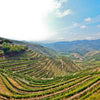
Beyond the classics, Catalonia has a wine identity that most American travelers underestimate. The Penedès produces cava by the traditional method — secondary fermentation in the bottle — and the smaller producers in Sant Sadurní d'Anoia are working at a level far above the commercial labels that fill supermarkets. The Priorat, two hours south of Barcelona, makes some of the most powerful red wines in Spain from old Garnacha and Cariñena vines grown in dark slate and quartz soils called llicorella. An afternoon in the vineyard with someone who knows these wines — not just the shop, but the actual land — is one of those experiences that reframes the whole trip.
For restaurant recommendations: in Barcelona, Cal Pep in El Born has been feeding the city's best fish to people who know for decades — order whatever comes out of the kitchen and don't argue. In Girona, El Celler de Can Roca — three Michelin stars, twice ranked the best restaurant in the world — is worth planning a trip around if you're serious about food. Reservations open 11 months in advance; set a reminder on your calendar right now.

Art, Architecture, and Living Traditions
The Modernista movement — Catalonia's turn-of-the-century explosion of architectural ambition — is the most visible layer of the region's artistic identity, but it sits on top of centuries of accumulated culture. The Romanesque frescoes rescued from Pyrenean churches and now housed in Barcelona's Museu Nacional d'Art de Catalunya are among the finest examples of medieval painting in Europe. Standing in front of the apse from Sant Climent de Taüll — Christ in Majesty, eyes wide, gold ground burning — you understand immediately that these painters knew exactly what they were doing. The scale, the authority, the utter confidence of the line work. These are not provincial decorations. They are masterpieces that happen to have been made for small mountain churches.
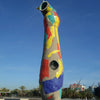
The Fundació Joan Miró, on Montjuïc, is the other place I take every client who will listen. The building, designed by Josep Lluís Sert, was conceived specifically for this collection — the light in those galleries is not accidental. Miró's late paintings, enormous and explosive, occupy the space differently from anything you've seen in reproduction. There's a physical impact to work at that scale when it's properly hung and properly lit. Go on a weekday morning.
Beyond the museums, the craft traditions of Catalonia are worth your attention — not as curiosities, but as living practices that tell you something real about the culture. In the Empordà, cork is still harvested by hand from the same oak forests that supplied the Romans; a corker who's been doing it for 40 years will show you the rhythm of the work if you ask. In the markets of Vic and Olot, you'll find ceramics with a vocabulary of forms that connects directly to the medieval workshops that made them. In the Garrotxa, small-batch chocolatiers and cheese producers are working with volcanic-soil ingredients that taste unlike anything you'll find at home.
Catalonia is also deeply embedded in a longer story of northern Spanish culture — one that connects naturally to the Basque Country next door. Both regions share a fierce pride in language, food, and identity that makes traveling between them one of the most illuminating itineraries I know. If that broader context interests you, my Basque Country guide is a good next read.
For travelers who want to explore beyond Barcelona on a day-by-day basis, our private day trips from Barcelona cover the best of the region — Montserrat, the Costa Brava, the wine country, and more — with guides who know the ground they're walking.

How to Travel Catalonia Well
Base town. Barcelona is the natural base for the region, and it makes sense to anchor there for at least the first three nights. For travelers who want to explore the Pyrenees or the Costa Brava more deeply, Girona is an underused alternative — well-connected by train to Barcelona (35 minutes on the high-speed line), centrally located, and far quieter in the evenings.
Ideal season. May, June, and September are the months I recommend most consistently. The light is extraordinary, the crowds in coastal areas are manageable, and the countryside is either in full bloom or turning. July and August are hot and crowded along the coast; winter in the Pyrenees can be spectacular if you're prepared for it.
Getting around. High-speed rail connects Barcelona to Girona, Tarragona, and Lleida quickly and reliably. For the Pyrenean valleys, the Costa Brava's quieter coves, and the Penedès wine country, a car is necessary. I don't recommend renting in central Barcelona — collect it when you leave the city.
How many days. A week is the minimum to do Catalonia justice: three days in Barcelona, then four days exploring beyond. Ten days allows the region to breathe properly — time enough for a full Pyrenean valley, a night in Cadaqués, and a leisurely afternoon in a Penedès cellar.
If you're weighing how Catalonia fits into a broader Spain itinerary — and many of my clients are — get in touch directly. Building the right sequence matters more than accumulating destinations, Contact us to talk through the options with you.
Frequently Asked Questions
What are three things that make Catalonia unlike anywhere else in Spain?
First, the language — Catalan is spoken daily, and the culture it carries is genuinely distinct from Castilian Spain. Second, the food: pa amb tomàquet, mar i muntanya cooking, and a cava tradition in the Penedès that rivals anything produced in Champagne. Third, the Romanesque churches of the Pyrenean valleys — a collection of medieval architecture so concentrated and so well preserved that UNESCO designated the Vall de Boí a World Heritage site.
How many days do I need to explore Catalonia properly?
A week is the honest minimum: three days in Barcelona and four days outside it. With ten days you can move at the pace the region deserves — a full valley in the Pyrenees, a night in Cadaqués, an afternoon in a Penedès wine cellar. Clients who try to see Catalonia in a long weekend almost always tell me afterward they wished they'd had more time.
Is Barcelona a good base for exploring the rest of Catalonia?
Yes, for most of the region. Montserrat is 90 minutes by train and rack railway. Girona is 35 minutes on the high-speed line. Tarragona's Roman ruins are under an hour. For the Pyrenean valleys and the quieter parts of the Costa Brava, you'll want a rental car and at least one overnight away from the city.
What is the best time of year to visit Catalonia?
May, June, and September are the months I recommend most consistently. The light is exceptional, the coastal areas haven't reached peak summer intensity, and the countryside is at its most beautiful. October is wonderful for the Pyrenees. July and August work well for Barcelona itself but can feel crowded and hot along the coast.
What should I eat in Catalonia that I can't find anywhere else in Spain?
Pa amb tomàquet — bread rubbed with ripe tomato and olive oil — is the foundation of the Catalan table and genuinely different from anything you'll find in Andalusia or Madrid. Beyond that, seek out esqueixada (salt cod salad with tomato and black olives), botifarra (the local pork sausage, grilled simply), and crema catalana, the original custard that France later borrowed and renamed. In the Penedès, drink cava from a small producer rather than the large commercial labels.
Is Catalonia safe and easy to navigate for American travelers?
Very much so. Catalonia is one of the best-organized and most tourist-conscious regions in Europe. English is widely spoken in Barcelona and in most tourist areas. The train network is reliable and easy to use. The main thing Americans sometimes find disorienting is the regional pride around Catalan identity — being curious and respectful about it, rather than flattening it into generic "Spanish culture," goes a long way.
Where can I see the most important art in Catalonia?
The Museu Nacional d'Art de Catalunya on Montjuïc houses the world's finest collection of Romanesque art — the rescued frescoes from Pyrenean churches are reason enough to visit Barcelona. The Fundació Joan Miró, also on Montjuïc, is essential. For Gaudí's architecture, the Sagrada Família and the Casa Batlló are the two buildings I never skip. In Girona, the cathedral treasury contains the Tapestry of Creation, an eleventh-century embroidery of staggering quality.
Can I visit Catalonia as part of a longer Spain itinerary?
Absolutely, and I'd encourage it. Catalonia pairs naturally with the Basque Country to the north — both regions share a fierce culinary identity and a distinct cultural pride that makes the contrast with central Spain illuminating. A ten-day itinerary moving through Barcelona, San Sebastián, and the Rioja wine country gives American clients a genuine cross-section of northern Spain. I've designed that exact route many times.
What are common mistakes tourists make when visiting Catalonia?
Spending the entire trip in Barcelona is the most common one. The second is moving too fast — trying to see Montserrat, the Costa Brava, and Girona all in one day, which means experiencing none of them properly. The third is ignoring the language: a few words of Catalan (gràcies, bon dia) open more doors than you'd expect, and making the effort signals that you're paying attention.
Do I need a private guide to get the most out of Catalonia?
Not everywhere, but for certain experiences the difference is significant. Inside the Sagrada Família, a guide who can decode the iconography transforms what would otherwise be sensory overload into one of the most coherent experiences of your trip. In the Penedès, visiting a cava cellar with someone who knows the producers and the terroir makes the tasting mean something. For the Pyrenean churches, a specialist in Romanesque art turns a beautiful building into a conversation. Context is what separates a trip from a journey.
Every article here reflects 25+ years on the ground—I've personally visited every destination, conducted the research, and taken these photos. AI helps us shape the writing and ensure clarity. The expertise? That's all mine.
- Carlos Galvin

Comments 0